
We would like to encourage all Fellow members to participate in the 2026 AAPA Board of Trustees (BOT) election. Voting will be open from August through September 30, 2025. All Fellow members are invited to cast their vote online via SurveyMonkey. Please check your email for the ballot invite. If you did not receive – or cannot locate – the ballot invite, please contact us at [email protected] for alternate means to vote.
To learn more about a candidate, click on their name above to be taken to their feature page. For this election, you will be able to cast your vote for up to three candidates.
Results will be announced in October, and elected members will begin their terms in January 2026.
Thank you in advance for your participation!
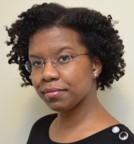
Organization: Hackensack Meridian Health
Location: Edison, New Jersey
Fellow Member Since: 2012
Current AAPA Position: Nominating Subcommittee Chair (recently stepped down to run)
Please tell the AAPA membership about yourself, and describe your past volunteer work.
Chevanne Scordinsky is a New Jersey native and avid writer whose interest in pathology began in elementary school. She attained a bachelor’s degree in biology with a biochemistry minor at University of the Sciences in Philadelphia (now Saint Joseph’s University) then graduated with a master’s degree as a Pathologists Assistant from Drexel College of Medicine. She has been a member and volunteer of the AAPA for nearly 13 years, holding various positions including chair of the Administration Committee, Content Author of the Head and Neck section (Grossing Guidelines), is on the Leadership SIG, and continues to find new ways to serve. Chevanne will be presenting at the national conference this year in September.
My biggest contribution was welcoming my institution’s first PA student and serving as the mentor. We were able to do follow a case end-to-end. The student read the patient history, was in the OR to observe the excision, grossed the case, then viewed the slides. It was a highlight in my career to provide that opportunity. I was able to have a newer staffer observe in the OR and gross the case that came in. I hope subsequent leaders will see the value of this experience. It fosters empathy toward another department’s process so we can find better ways to work together. It’s also another way of putting pathology in higher regard.
I also held a neuroanatomy lab for the staff this year. We had three brains to cut and I paired off our staff to take one each. They were given the case numbers beforehand to read up on the case. Some even performed the original autopsy. We went through orientation and major landmarks and pointed out some important clinical signs. We sectioned the brains and identified areas of interest along with the standard sections to take. Each pair was able to take their own sections but also see how the anatomy of each brain differed. The neuropathologist and morgue attendant, who served as teaching assistant since he had extensive experience cutting with the pathologist, assisted each pair with their sections and explaining the significance of those areas. It was another very proud moment in my career to facilitate this.
Why are you interested in serving on the AAPA BOT?
I am interested in driving a stronger future for PAs and getting them to see the dynamism in our profession. We have the potential to expand our reach and use our expertise off the bench. We can develop a community of leaders and thinkers who can shape pathology positively.
What is your understanding of the mission and vision of this organization?
The AAPA mission is to provide the membership with educational opportunity, advocacy and support. The organization’s vision is that of a thriving professionals and a community made strong by dedicated volunteers.
What do you think should be the most important priority for AAPA?
The AAPA should prioritize legislative advocacy of pathologists’ assistants in the forensic sector to enable PAs to stem the outflow of forensics pathologists, but also for licensure country-wide with reciprocity statutes.
Is there a particular area that you feel could be improved within AAPA? Why do you feel it needs improvement and how can you help improve this?
There are stellar members who are good at networking and content production who I think could be utilized for improved PR and to respond to both official and unofficial member inquiries. The organization needs modernization and more at-the-moment communication with members. This must be tempered of course but would be beneficial overall.
What is the biggest challenge your lab is currently facing, and how are you addressing it?
The greatest challenge my lab faced was recruitment of certified PAs. We had a small community of OJTs that kept popping up for job opportunities (with varied results) and they stayed short term. I addressed this by making ongoing connections in the community, giving my HR department information about PA schools around the nation (with contact information) and onboarding as a PA program clinical site. The mission was to get the name of the institution into the community and have a pipeline for qualified folks to apply when there were vacancies. So far, it has worked out well. Since leaving the department, I can still serve as a point of contact if folks are interested, but those initial steps will make things easier in the years to come.